Categories
BOFIN BOFIN Blog

Agribusiness urged to back farmer-led research

Agribusiness urged to back farmer-led research

Farming’s commercial interests should follow Defra’s lead and financially support farmers who carry out research on their farms, says BOFIN founder Tom Allen-Stevens.

Speaking at a Westminster Food & Nutrition Forum seminar on the next steps for agricultural policy, Tom said Defra’s Farming Innovation Program had demonstrated what farmers can achieve when properly resourced to carry out research on their own farms.

“Farmers have never really been credited with providing good R&D on farm, but they can do it,” he said.

“No one knows farming businesses better than farmers do, or how to improve them. Give farmers the resources and they can deliver.”

Across five major Defra-funded projects involving BOFIN, almost 100 farmers have delivered around 400 on-farm trials, with more than £650,000 set to have been paid directly to participating farmers by the end of this year.

One example is the recently completed SLIMERS project, where farmers and agronomists delivered 97 on-farm trials over three years.

Their work helped develop an algorithm which can turn a field soil scan into a slug risk map. Initial tests suggest the approach could reduce slug pellet use by an average of 50%, representing a potential industry saving of around £6 million a year.
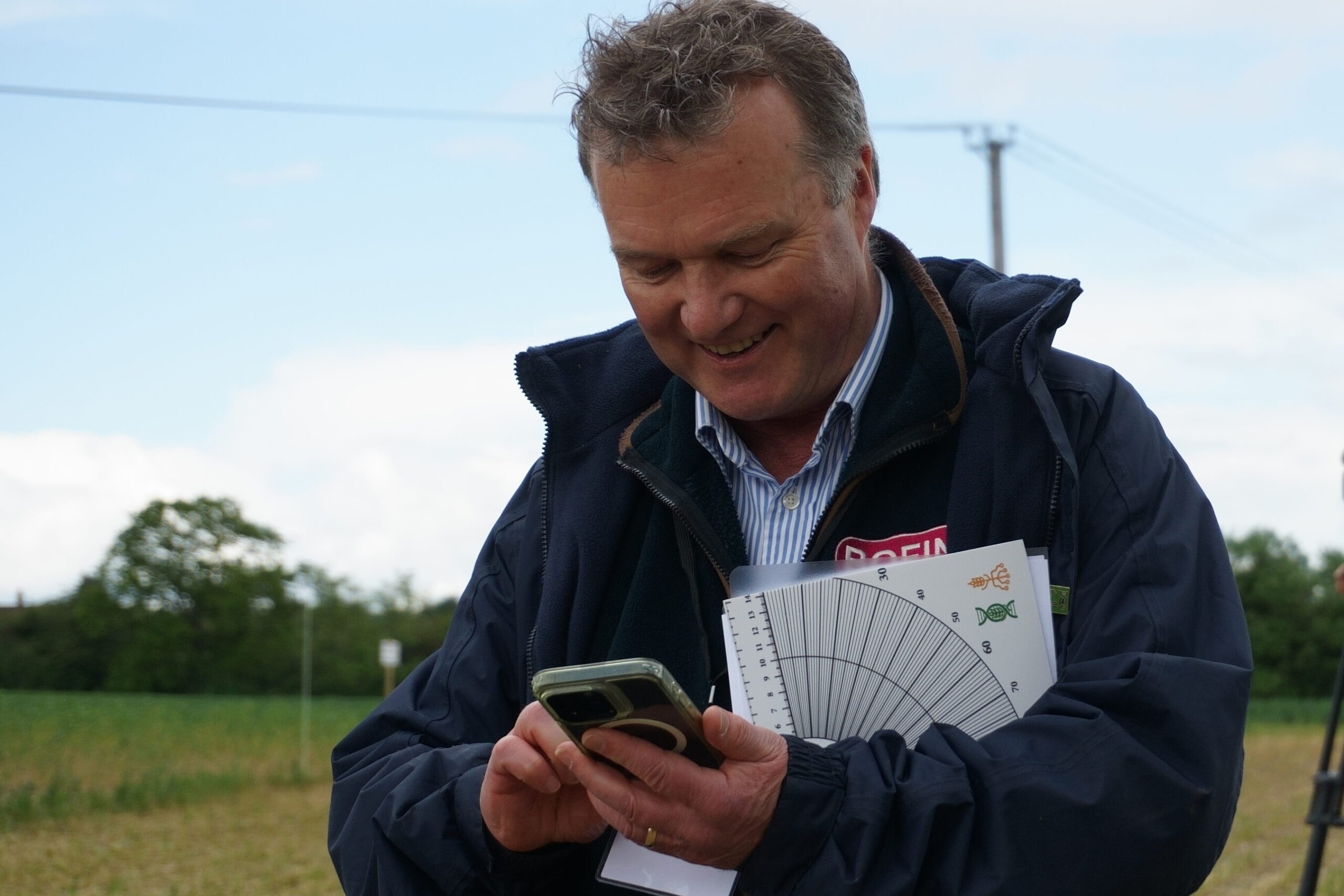
Tom using the slug maps developed as part of the SLIMERS project

Tom also highlighted the opportunities emerging through ADOPT, part of Defra’s Farming Innovation Program, which supports farmer-led trials of new practices and technologies. BOFIN currently has 10 ADOPT projects underway, ranging from relay cropping and British baked beans to weed detection using robot dogs.

“In the 30 years I’ve been reporting on agricultural innovation, I’ve never known a time when genuine innovative flair on farm has been so well supported,” said Tom.

“The Farming Innovation Program, particularly ADOPT, is one area where Defra is getting it right.”

Asked whether private finance could play a greater role in supporting farmer-led R&D, his response was unequivocal.

“Yes, absolutely. And yes, please.

“Defra has shown what farmers can achieve when they are given the opportunity and resources. We’d love to see private finance get behind farmer-led research too.”

He added: “Let’s champion the people who are doing this well, do more of it and bring in private finance too. It makes sense for them, and it makes sense for farming.”

Categories
BOFIN Blog PROBITY

BOFIN Blog:

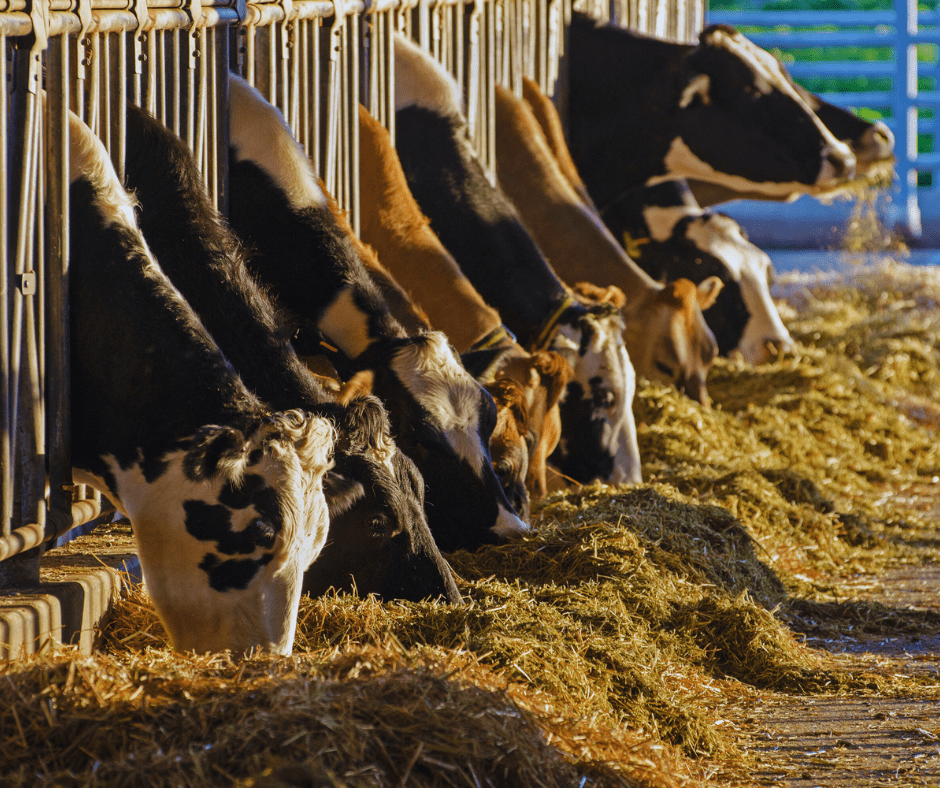
When Arla announced towards the end of November it was to trial Bovaer, a feed additive used to reduce methane emissions from dairy cows, it prompted a maelstrom of concern from consumers and some farmers. This was reportedly fuelled by misleading information designed to debunk the technology.

The question is why? And following on from that, was it a step backwards for advances in farming or were there lessons learned?

An important question – not just for partners in The PROBITY Project but the wider industry too – is whether there will be a similar backlash when precision-bred crops are introduced into commercial field trials for the first time here in England later this year.

Here’s some information about Bovaer from the Food Standards Agency, the NFUAHDB, the manufacturer DSM-Firmenich, and Arla

BBC Verify has looked into the media storm that followed the announcement of the trial. It has also received coverage in The Guardian, among others.

It will be a matter of personal choice for dairy farmers as to whether they use it. For some, adding a small amount of 3-Nitrooxypropanol to the feed intake of their herd is no different to an arable farmer who applies a small amount of isoflucypram (as in Iblon) to their wheat crop. It’s a simple solution to quite a major problem with clear benefits.

For others this is meddling with nature. It’s a cheat, which introduces an imbalance that is not sustainable. There are other ways for dairy farmers to reduce emissions, as there are other ways to reduce disease pressure on wheat crops.

What lies at the heart of this is the gut microbiome. Like the soil microbiome it is incredibly complex. Science is only just beginning to understand them.

For farmers, we know the two are inextricably linked. Both the soil and gut microbiomes have a massive influence on the performance of farming systems. Use the soil microbiome effectively to grow nutrient-dense food and this will engender a healthy gut microbiome, both for the livestock in our care and for those we feed.

But we actually know precious little about how to do this, nor how to use potentially powerful technologies in our quest to do it better.

Take gene-editing for example. 

Bold claims are made by scientists about how plant signalling pathways can be influenced and the extraordinary abilities to interact with the soil microbiome this then confers.

So how should farmers respond? We can choose to take the scientists at their word. They are the experts. We can rely on them to develop commercial products with industry partners. We don’t need to know how they work, just how they add to our profitability.

Or we are better off without this technology. We can work with scientists to gain knowledge about these complex natural systems without creating an imbalance and skewing our view of what’s truly sustainable.

Or we can work with scientists as they introduce these new traits. We can use the technology to understand this complex science better. We can co-develop the products and tailor them to how we’d like them to work in the field.

It’s an important choice. Because until farmers truly understand the living organisms in our care, and that’s all of them – animals, plants, microbes – we will continue to be misunderstood by consumers and misrepresented by our politicians.

And it’s the backlash that we witnessed with Bovaer, and a rational perspective on how a new technology is perceived was lost in a noisy, thrashing sea of misinformation.

There is more information on the Sequence Circle about gene-editing and precision-bred crops. How do we do better with gene-editing and precision-bred crops this than we did with Bovaer?

Join the discussion on The Sequence Circle.

Tom Allen-Stevens is founder of the British On-Farm Innovation Network (BOFIN), which leads PROBITY, a £2.2M Defra-funded project bringing precision-bred crops to commercial farms in England for the first time in Europe