Webinar to launch new oilseed rape project and knowledge exchange community
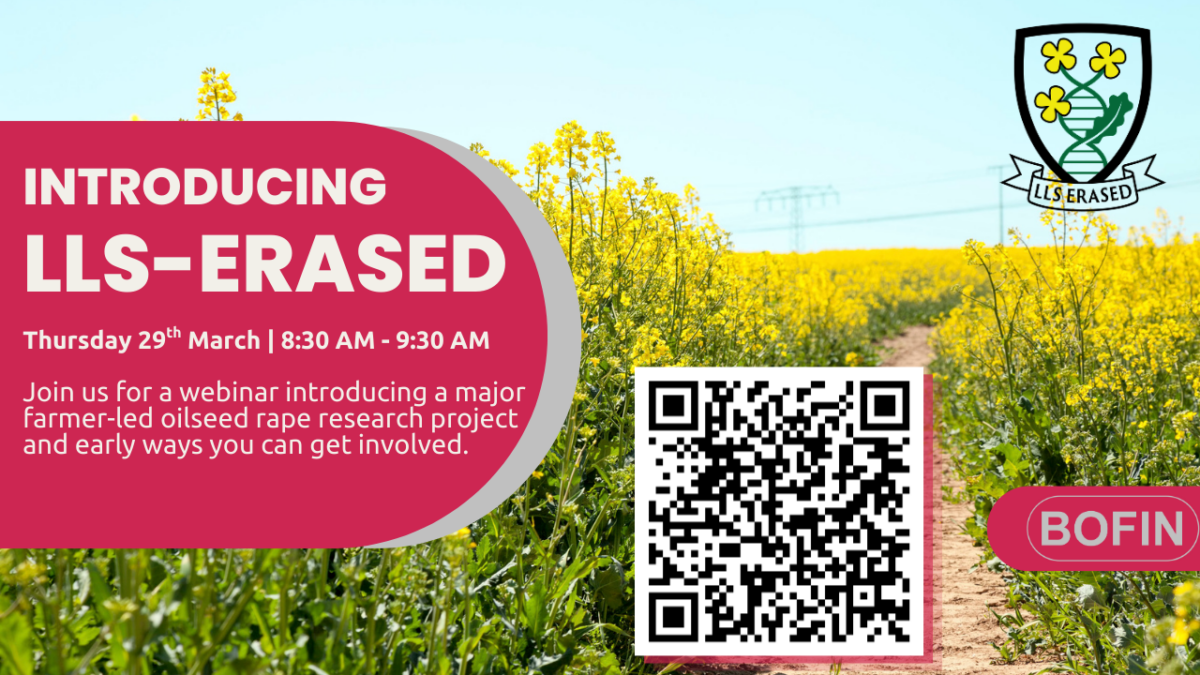
Arable farmers, researchers and agronomists are invited to a webinar on Thursday 26 March to learn about a major farmer-led oilseed rape research project and two early ways farmers can get involved.
The webinar, which will run from 8.30-9.30am, will outline exciting new research into light leaf spot being carried out by the LLS-ERASED project, as well as opportunities to get involved.
This includes the free ‘OSR Circle’ community, which connects growers, scientists and other experts to share knowledge and help shape research priorities.
Members of this community will be the first to be invited to become the project’s ‘Spore Scouts’ by sending in leaf samples to researchers at the University of Hertfordshire.
The webinar will also be the first chance to hear about a new precision-bred OSR line with significantly reduced susceptibility to this devastating disease. It is currently being multiplied up ready for farmer-led field trials – the first of their kind across Europe.
LLS-ERASED is a three-year £2.5m farmer-led project funded by Defra’s Farming Futures R&D fund. Led by the British On-Farm Innovation Network (BOFIN), it brings together farmers, plant breeders, crop scientists and agronomists to tackle light leaf spot using precision breeding alongside new disease-management tools.
Speakers for the webinar are Tom Allen-Stevens of BOFIN, Prof Yongju Huang of the University of Hertfordshire and Dr Faye Ritchie of ADAS. They will also be joined by the project’s technical lead Dr Rachel Wells of the John Innes Centre, and Scottish Agronomy’s Adam Christie, for a Q&A session.
Tom Allen-Stevens urged anyone with an interest in the future of oilseed rape to register for the webinar to find out more.
“Oilseed rape is an important break crop, but light leaf spot is a growing threat to its viability. I encourage farmers and other industry experts to join us to hear about the fascinating work being undertaken to tackle this damaging disease, and the opportunities to get involved.
“The OSR Circle community offers an opportunity to tap into expertise and experience from growers and other experts from across the country. Anyone with an interest in the crop is welcome to join and contribute. For those keen to do something practical, we will also launch our Spore Scout campaign which invites farmers and agronomists to send leaf samples to our scientists at the University of Hertfordshire.”
To find out more and register for the webinar, visit https://tinyurl.com/OSRwebinar