
SLIMERS scientists identify key genes for slug resistant wheat
Scientists have identified three regions of the wheat genome responsible for resistance to the grey field slug (Deroceras reticulatum).
The discovery, made by scientists at the John Innes Centre working on the SLIMERS project, paves the way for plant breeders to develop new slug resistant wheat varieties.
SLIMERS is a three-year Defra funded project which has brought together scientists, farmers and industry partners to tackle one of arable farming’s most persistent pest problems.
The findings build on more than a decade of research that began in 2015, when scientists at the John Innes Centre screened wheat varieties from the historic Watkins Collection for natural slug resistance. The work identified four promising accessions, but Watkins 788, a landrace originally collected in Turkestan (part of modern-day Kazakhstan and and an important stopping point on the historic silk road), particularly stood out.
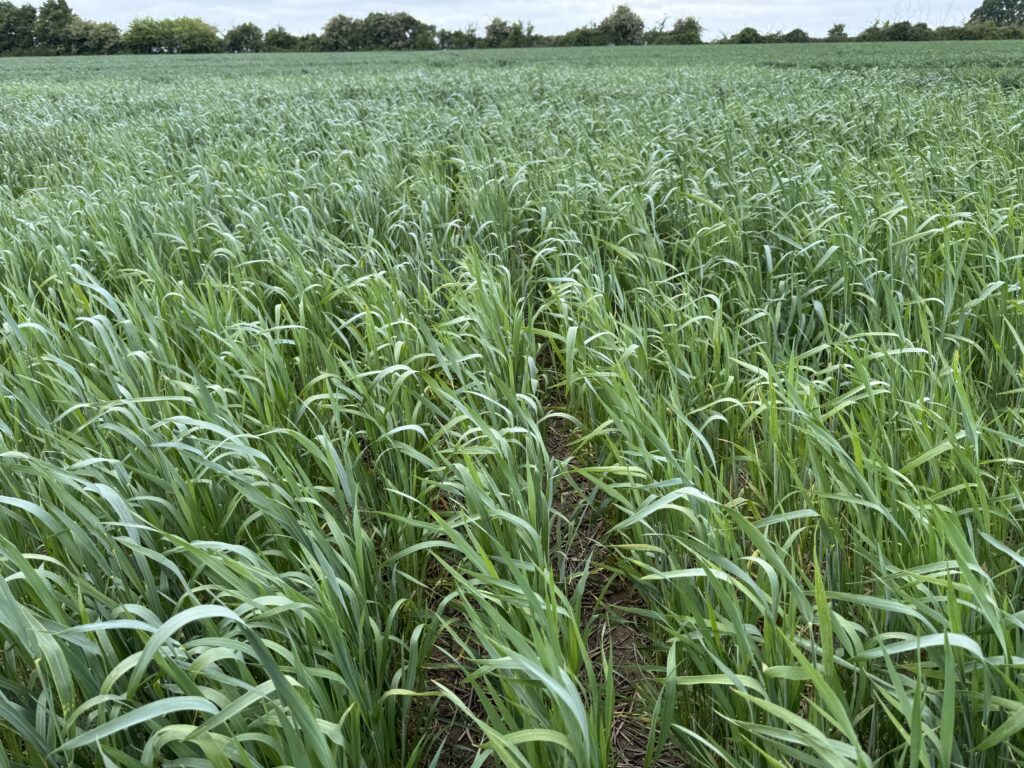
BOFIN later joined forces with the John Innes Centre to launch the Slug Resistant Wheat project, with six farmers volunteering to test the wheat varieties under real farming conditions. This confirmed Watkins 788 as potentially slug resistant and led on to SLIMERS, which expanded the research effort with other partners, the UK AgriTech Centre, Harper Adams University, Agrivation, Fotenix and Farmscan Ag tackling other areas of sustainable slug control.
As part of SLIMERS, BOFIN’s ‘Slug Sleuth’ farmers trialled Recombinant Inbred Lines (RILs) developed from crossing Watkins 788 with commercial wheat variety Paragon. This allowed researchers to observe how the lines performed under varying soil types, weather conditions and slug pressure across the country.
At the same time, laboratory and insectary experiments at the John Innes Centre provided controlled testing conditions to complement the field work. Dr Victor Soria-Carrasco and his team carried out detailed slug feeding trials using grey field slugs supplied by farmers and citizen scientist ‘Slug Scouts’, who posted slugs collected from farms and gardens across the UK. Some of the slugs were also retained to establish breeding colonies for further research.
“Having slugs from different parts of the country was important,” explained Victor. “We know slug populations can vary, so using a wide range of grey field slugs helped us ensure the results represented real-world conditions.”
In total, researchers tested 77 Recombinant Inbred Lines alongside their parent lines. All the wheat lines had already been genetically sequenced, allowing scientists to identify the genomic regions linked to slug resistance more quickly than would previously have been possible.
The strong laboratory findings encouraged project partners to move on to on-farm trials in autumn 2025. However, very low slug numbers in the trials precluded clear conclusions on field performance explained Professor Keith Walters of Harper Adams University who analysed the trial results.
“Overall, however, the laboratory work demonstrates obvious potential which makes field trials under conditions with greater slug pressure an urgent requirement,” he said.
The discovery of the genomic regions linked to slug resistance gives plant breeders powerful new tools to develop commercial ‘slug resistant’ wheat varieties.
Dr Simon Griffiths of John Innes Centre said: “The thousands of data points collected in the feeding trials helped us identify the specific molecular markers or parts of the chromosome, linked to slug resistance. With that understanding, and the screening protocol we have developed, plant breeders can now select for those markers to produce a slug resistant variety.”
The potential of this discovery is enormous for arable farmers, said Tom Allen-Stevens, founder of BOFIN and SLIMERS project lead.
“Slugs are one of the biggest challenges for arable farmers so developing wheat varieties with natural resistance would help reduce crop losses and input costs, lower environmental impact and increase resilience.
“What’s particularly encouraging is that not only have these results been proven in the lab, but there were many enthusiastic farmer volunteers wanting to test them on commercial farms, demonstrating the confidence of industry players in the amazing advances we can make when farmers and scientists work together.”
Read the full slug resistant wheat knowledge guide below, or head to the resources page to see the full SLIMERS toolkit of knowledge guides.