Farmers have successfully delivered an on-farm trial to explore the properties of a wheat believed to be resistant to slugs. The first trial of its type to be conducted by UK farmers, results will be revealed at a webinar on Thursday 16 March at 8:30am.
The trial is part of a study, co-ordinated by BOFIN (British On-Farm Innovation Network), to help farmers move away from a reliance on chemical control measures and the potential environmental impact of those chemicals.
Ten “Slug Sleuths” – farmer members of the network – were contracted to establish a trial plot of Watkins 788, a Landrace wheat variety never grown before on commercial farms in the UK.
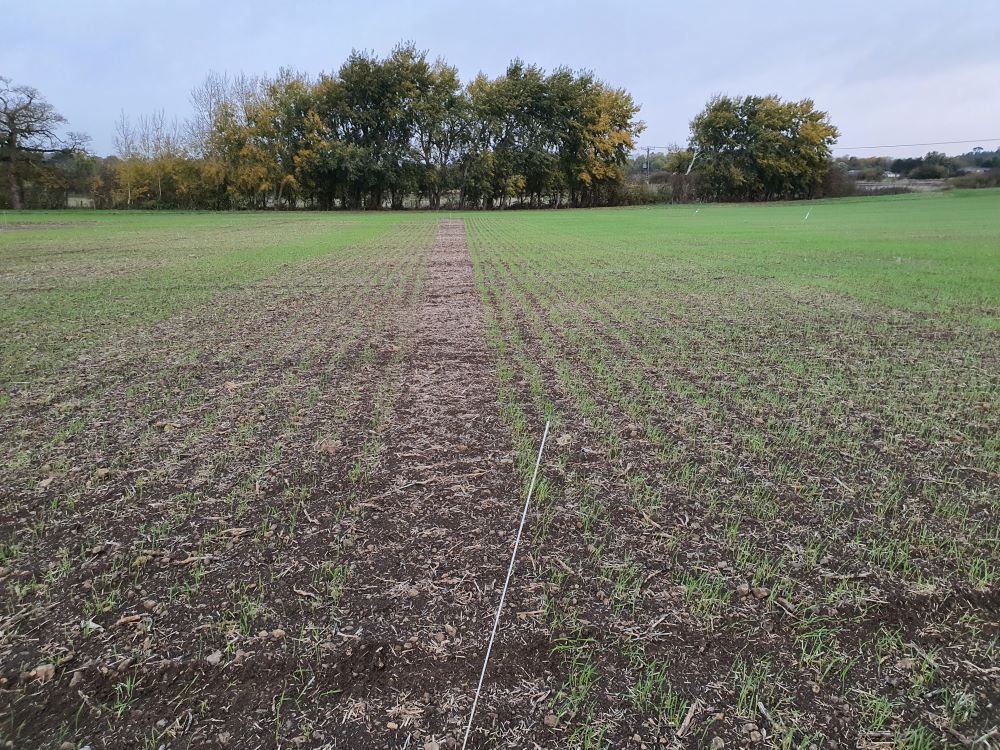
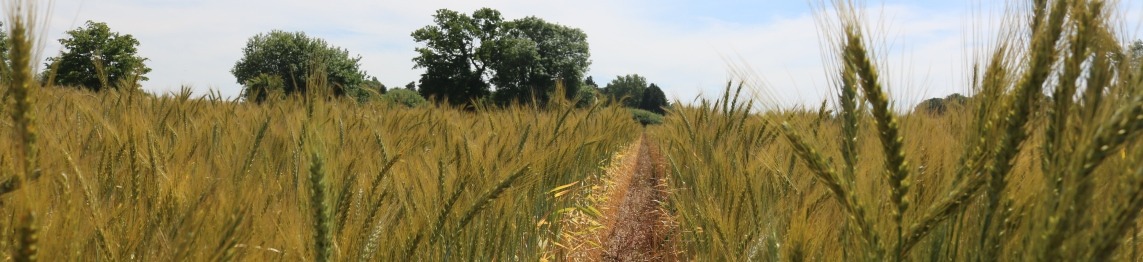
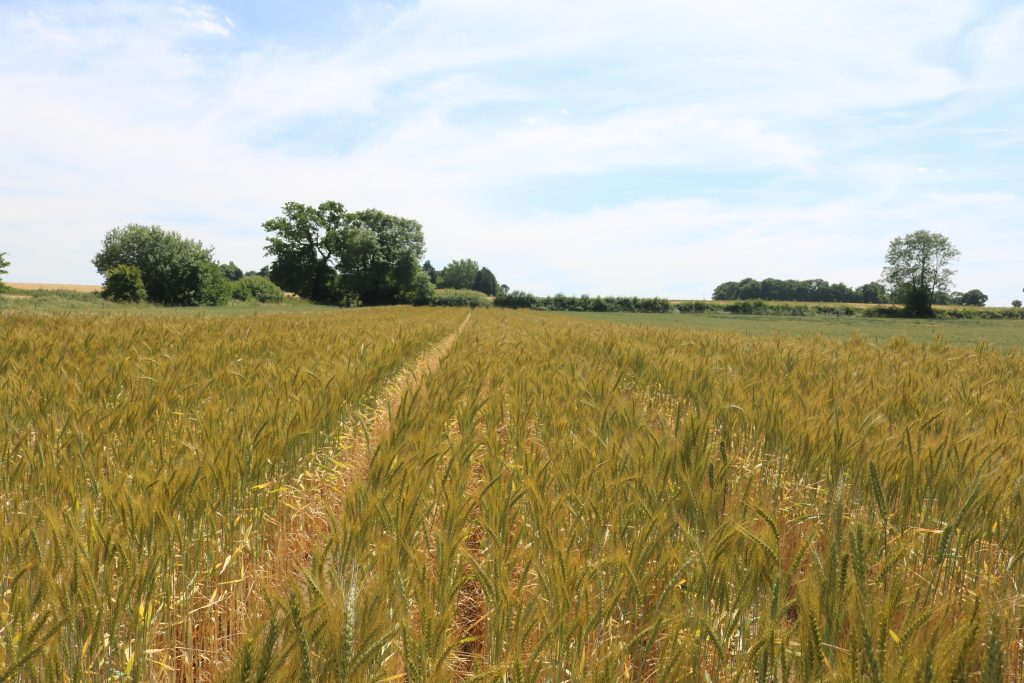
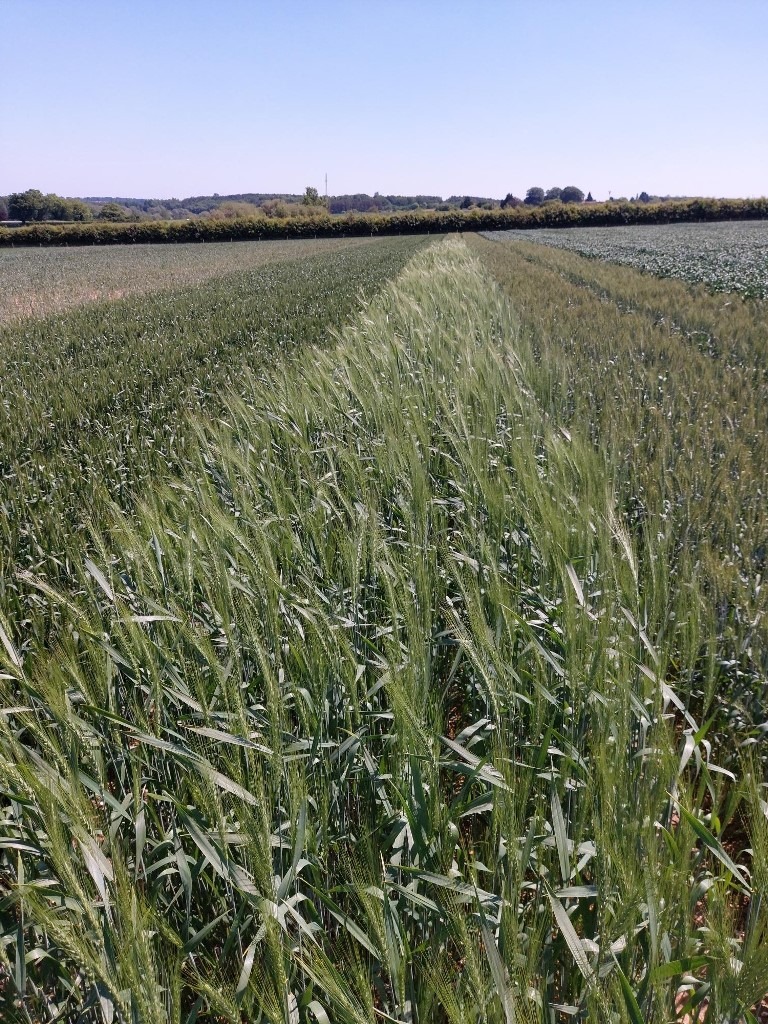
The trial compared Watkins 788 (left) with the farm standard wheat.
This was compared with their farm standard wheat variety and the farmers monitored the plots closely for slug activity.
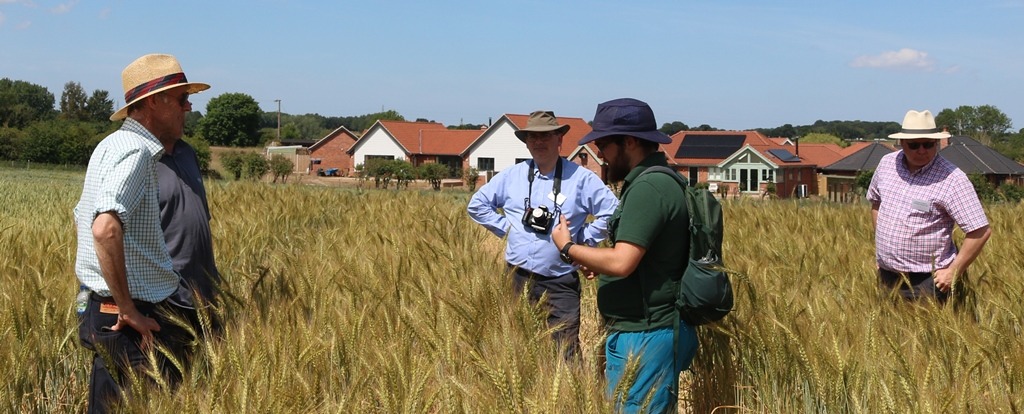
The ten farmers followed a protocol developed by BOFIN with Keith Walters, Professor of invertebrate and pest management at Harper Adams University.
“The way the trials were established and data captured was a huge success,” comments Keith, who also analysed the results.
“This shows that farmers can set up and deliver valid results of field trials from a scientific study. These on-farm trials are an essential element when testing new techniques and technologies.
Keith Walters
“The implications are huge – If we can get scientifically sound results from a range of sites without sending research assistants all over the UK, that offers significant savings for field research.”
Keith will deliver the first-year results of this ground-breaking trial at the webinar on Thursday 16 March.
Anyone can attend and join the Slug Circle, a group of farmers and scientists who are helping to shape how the project develops.
Simon Griffiths
Also presenting at the webinar will be Dr Simon Griffiths, Group Leader of Designing Future Wheats at the John Innes Centre, who will bring attendees up to date on the genetics of Watkins 788 and the quest for a slug-resistant trait.
He will also highlight lab-based feeding trials, currently underway to explore further this wheat’s fascinating properties, along with other wheats undergoing tests.
The Slug Sleuths will then come together to discuss the trial and its implications for improving crop returns and reducing reliance on chemical control.
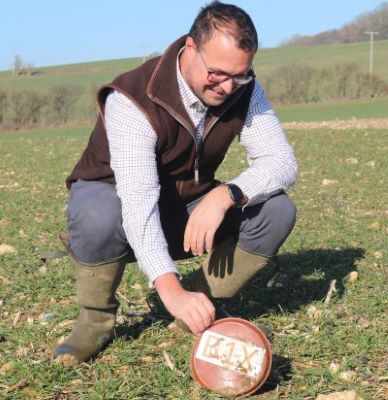
Slug Sleuth Jamie Melrose inspects a trap.
Chaired by BOFIN Founder and Oxfordshire farmer Tom Allen-Stevens, webinar attendees will be invited in to give their views and ask questions directly to the panel.
“We started this quest for a slug-resistant trait over three years ago, and it would never have got underway had it not been for the enthusiasm of the farmers who got involved,” notes Tom.
“We’ve not only proven the case for farmer-led research and directed cutting-edge R&D towards a much-needed in-field use, we’ve shown farmers can do the fieldwork to prove the concept.
“It means farmers can play their rightful role in delivering the Fourth Agricultural Revolution and accelerate adoption of some of the jaw-dropping genetic innovations currently being developed in labs and glasshouses across the UK.
“It will also help Defra direct some of the £168M of funding recently announced to encourage the take up of new technologies and advance productivity for UK farmers.”
The first year of the Slug-Resistant Wheat project, which started in April 2022 and is led by BOFIN, is supported through a contribution by the Environment Agency as part of its Environment Programme.
This supports partner-led projects as part of a Catchment Based Approach to improve the chemical and ecological quality of waterbodies.
Anyone can join the project for free and get involved in the Slug Circle – a group of around 60 farmers and scientists who have come together to explore alternative forms of slug control and who have helped shape the project as it progresses.
Driven and steered by the farmers themselves, at the centre of the project are the 10 Slug Sleuths, who carry out the on-farm trials with genetics expertise provided by Simon, and seed multiplied up by JIC at its Dorothea de Winton Field Station, Norwich.
The feeding trials are the final, new element of the project and involve “Slug Scouts”, volunteers who are gathering slugs from the field and then sending them in for the lab-based feeding studies. These are conducted by Dr Victor Soria-Carrasco and the Entomology and Insectary Platform team at the John Innes Centre.
Farmers looking for a better way to deal with the annual scourge of slugs are invited to join a webinar that will present progress on finding a wheat that’s resistant to the slimy pest.
Taking place on Wednesday 5 October at 8:30am, the webinar will give an insight into the landrace variety consistently spurned by slugs in lab tests, which is now under scrutiny in a ground-breaking trial with ten BOFIN members. There’ll also be news of an elite wheat line, suspected to have the same properties, which is being included in the trial.
Anyone with an interest in keeping crops slug-free, or just curious about the behaviour of these creatures and whether plant genetics can help, can register to attend.
In doing so, they will join the Slug-resistant wheat Knowledge Cluster that will track progress, help shape how the trial develops and share experiences.
Farmers in the cluster will work with scientists on the project to develop an understanding of farming systems at the same time as developing the next generation of wheat genetics.
Simon Griffiths
At the webinar, Dr Simon Griffiths from John Innes Centre will explain the background to Watkins 788, the landrace wheat believed to be resistant to slugs. He’ll outline the lab tests done to date and what they’ve learned about the wheat in the two years it’s been grown at the JIC field station near Norwich.
Keith Walters
Prof Keith Walters of Harper Adams University will bring the latest research on slug behaviour and how the trial has been set up to determine how grazing will be monitored.
Tom Allen-Stevens
Some of the farmers involved in the project will then join BOFIN founder and co-ordinator Tom Allen-Stevens to discuss the trial and its prospects and how they hope the project will shape up.
There’ll then follow a discussion, bringing in the webinar attendees, which will be an opportunity to gain further insights into the wheat genetics and slug behaviour. Uniquely, those who attend the webinar will help shape the project and decide the activities the Knowledge Cluster will undertake.
If there is a trait that can be bred into modern wheats, farmers in the cluster will be the first to try it. This may take many years, during which they will work with scientists to co-design strategies around crop palatability and develop a far more sustainable approach that will combat the pest in conjunction with genetic resilience.
It’s free to attend and there’s no obligation. All you need to do is register. If the date’s not good for you, register anyway and you’ll be sent a link to access the recording after the event.
To take part in the Knowledge Cluster, you will need to register with the Trinity Pioneers platform and then join the Slug-resistant wheat project.
Over the last 2 years, we have been putting the Watkins 788 landrace variety to test through analysis by scientists at the John Innes Centre and Harper Adams University, through on-farm trials by our Slug Sleuths and from slugs sent in by our Slug Scouts. Watch this video to find out what the results were of this incredible project.
Although this project has now come to a close, we are underway with another slug-focused project; SLIMERS. Make sure to join the slug circle to keep receiving updates and join in our mission to tackle arable farmings biggest pest:
Watkins 788 is one of a collection of landrace wheats currently being screened for interesting traits by scientists working on the Defra-funded Wheat Genetic Improvement Network (WGIN) programme.
10 Slug Sleuths, BOFIN farmers conducted trials for this project by following an in-field trial protocol drawn up by slug behaviour expert Professor Keith Walters of Harper Adams University.
Results can be found in the video above or by clicking here.
BOFIN members are taking part in what’s believed to be the first ever field trial of wheat to see if it’s resistant to slugs. Those interested can now join the Slug Circle.
Researchers at John Innes Centre have identified the potential trait in one of a diverse collection of landrace wheats currently being screened for properties of interest.
Alongside this line, some of the growers taking part in the trial are also testing an elite wheat, bred by UK plant breeder John Blackman, that may have the same property.
“We decided to screen some of the Watkins material for slug resistance as this was identified as a priority,” says Dr Simon Griffiths of JIC who carried out the work as part of the Defra-funded Wheat Genetic Improvement Network (WGIN).
This lab-based research singled out Watkins 788 as a variety slugs consistently spurn. The aim of the trials is to determine if this is also the case in the field, where the wheat will be the only food source available.
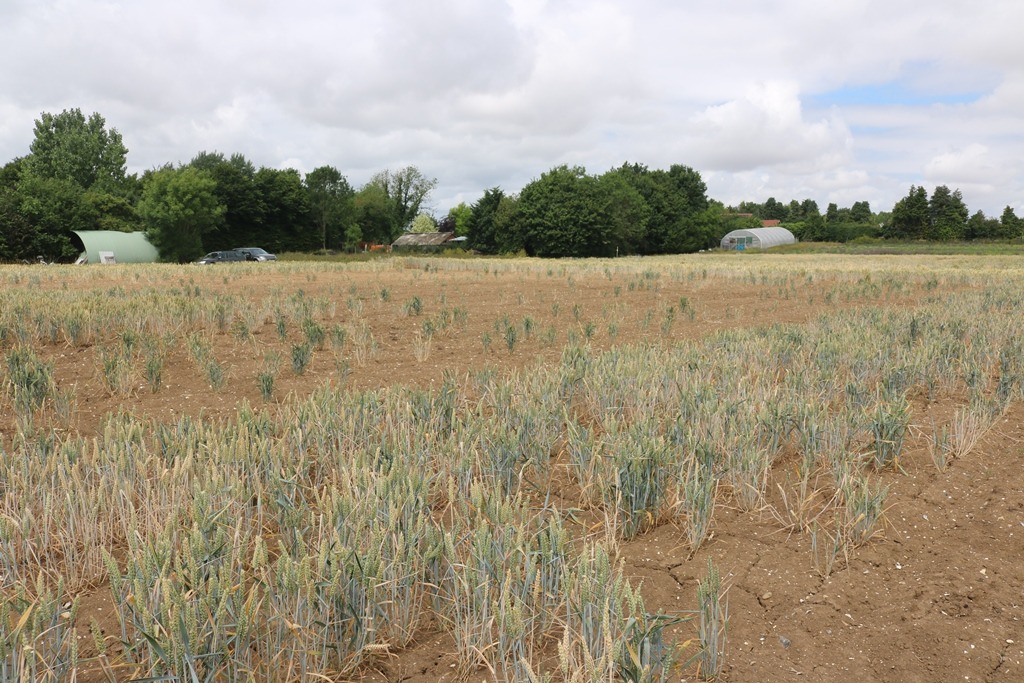
Ten farmers from Devon to Yorkshire have been growing the wheat in 20x20m plots within fields known to have a problem with slugs.
A protocol for how the trial is managed has been drawn up with the help of research staff at JIC working with Professor Keith Walters of Harper Adams University. He’s led an AHDB-funded project into slug behaviour that concluded in 2021.
Meanwhile, wheats bred by independent UK plant breeder John Blackman suffered sorely from slugs last autumn. But curiously there was one line the slimy pests barely touched. The site at Great Abington, near Cambridge, on alluvial, heavy boulder clay, is where John multiplies up promising lines and selects those to go forward for National List trials.
“I had about 30 pre-NL1 multiplications, but many of these were on a part of the site that suffered heavy rainfall soon after drilling in early November,” he recalls. Slugs moved in and hollowed out much of the seed before it had even germinated. “We never expected the slugs, but they were worse than we’ve ever had them.
“The pellet application we applied was too little, too late. Of the 30 lines, only 10 can be salvaged.”
One of these, located right in the centre of the worst affected area, is a KWS Santiago/Graham cross that appears relatively unscathed, despite all of the other candidates in the surrounding plots being almost completely obliterated.
“Every plant you get from an F1 cross is different,” explains John. “This one appears to have something in its genetics the slugs don’t like.” John kindly offered all of the remaining wheat seed from this particular cross to be included within the BOFIN trial. “This level of losses in an NL1 prospect is a disaster. Let’s hope something positive comes of it,” he says.
Four of the ten BOFIN members have been growing John’s wheat alongside the Watkins. Overseen by the scientists involved, the trial protocol was finalised through consultation with the trial farmers and through discussion with members of the BOFIN Slug Circle wheat.
Farmers, scientists and anyone curious about slug-resistant wheat or slug behaviour are encouraged to join the Slug Circle to gain insight on the project, share experience and shape how it evolves.
If there is a trait that can be bred into modern wheats, farmers in the Seed Circle will be the first to try it. This may take many years, but the aim will be to work with scientists to gain an insight into slug behaviour in the field and co-design strategies that will combat the pest in conjunction with genetic resilience.
“Slug management usually focuses on control of the pest, mainly through applying pellets,” points out Keith. “There is so much we now understand about slug behaviour that we can develop with growers, bringing in aspects of crop palatability.”
The aim is to develop understanding of farming systems at the same time as developing the next generation of wheats, explains Simon. “This is a far more sustainable approach than traditional plant breeding where the two are developed in isolation. It’s made possible through the introduction of new plant-breeding techniques that considerably shorten the timespan it takes to bring a new trait to market,” he notes.
Wheat believed to be resistant to slugs will be one of the star attractions at the Breeders’ Day at the John Innes Centre on Tuesday 21 June 2022.
BOFIN members have been invited to attend the event and a select few will get the opportunity to put this wheat to the test in a ground-breaking trial this autumn.
The wheat is one the Watkins Collection of landrace wheats currently being screened for interesting traits by scientists working on the Defra-funded Wheat Genetic Improvement Network (WGIN) programme.
A set of choice chambers was used that allows slugs to choose at random varieties they would like to graze and those they prefer to avoid. Researchers found there was one wheat that stood out as consistently spurned – Watkins 788.
“We don’t know yet whether this wheat truly resists slugs or whether they’d still eat it in a field situation where there’s no other choice,” explains Prof Simon Griffiths of John Innes Centre who leads the research.
Could landrace wheat Watkins 788 be resistant to slugs?
The concept was put to BOFIN members in 2020 and considerable interest came back in conducting trials of 0.4ha plots of the wheat – the area required to provide the optimal foraging distance to study the slugs’ behaviour.
“On the strength of this initial interest, we’ve spent the last two years multiplying up enough seed, and we’re now ready to go,” say Simon. The trial will start this autumn, closely monitored by JIC entomologists.
Only BOFIN members will be able to take part in the trial. Fields with a history of slug activity are sought, preferably following a crop (such as oilseed rape) that will promote slug activity.
As a landrace variety, Watkins 788 will not be an easy wheat to grow – it will be prone to lodging, susceptible to disease, and will not yield well. But following the monitoring, it will be important to bring the crop to yield with viable, clean seed as very little of the line currently exists.
“If the wheat truly resists slugs this will be a very valuable trait to pinpoint and bring into UK breeding programmes,” says Simon.
“Long term funding from Defra and Biotechnology and Biological Sciences Research Council (BBSRC) have given us the tools we need to identify the genetic basis of valuable pest resistance such as this.”
There’s currently about 0.5ha of the ‘slug-resistant’ wheat growing at John Innes Centre and BOFIN members have been invited to the Breeders’ Day on Tuesday 21 June to view it.
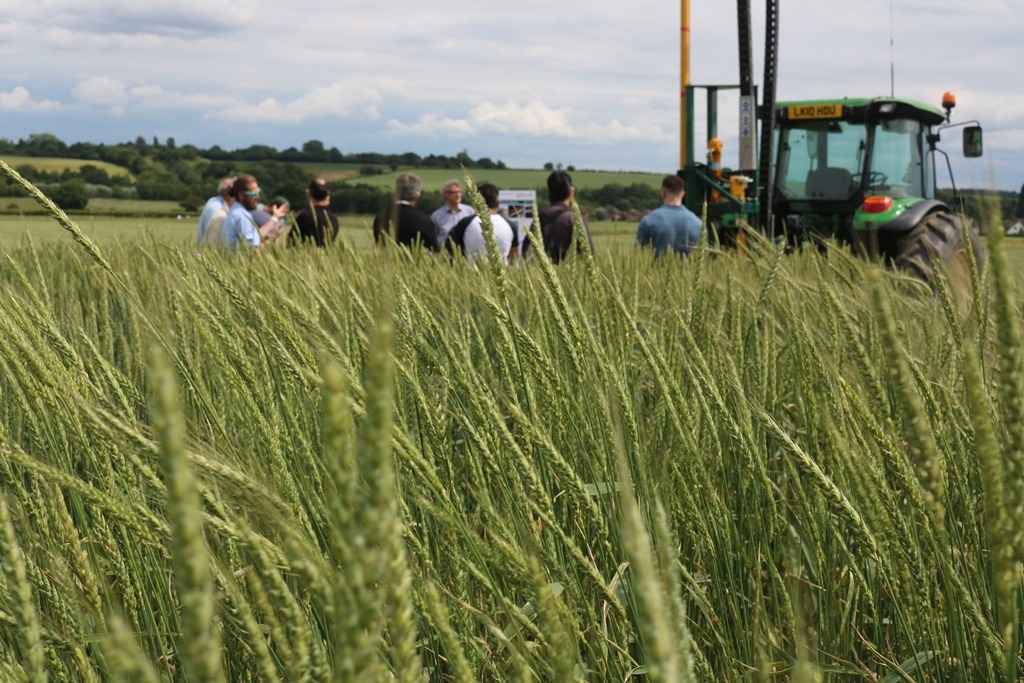
The plan is to have a ‘huddle’ next to the plot with Simon and other members of the research team to get an insight into Watkins 788 and the work they’re doing.
Any BOFIN member interested in taking part in the trial should contact tom@bofin4982.live-website.com. They are also strongly recommended to attend the Breeders Day. To register, click the button below: