Categories
Uncategorized

BOFIN east inspiration day – book your place now

Farmers invited to  ‘Inspiration Day’ on Hertfordshire farm

Farmers with an eye for innovation are invited to Thrales End Farm, Harpenden on 8th May to explore trial results and farmer-led innovation.

The ‘Inspiration Day in Hertfordshire – organised by the British On-Farm Innovation Network (BOFIN) – is the first of three national events. This one will focus on the TRUTH (Thriving Roots Underpinning Total soil Health) project, with discussions on soil health and its role in resilient crop production systems. 

TRUTH is a three-year £1m project with twin aims of boosting productivity while improving soil health. The project is Defra-funded and led by BOFIN with four partners UK Agri-Tech Centre, the John Innes Centre, University of Nottingham and PES Technologies. 

The project is now in its third year, with 20 Root Ranger farmer trialists undertaking trials to validate on-farm soil and root health testing tools, including a sensor that can detect more than 10 soil health indicators through a “scent fingerprint”.

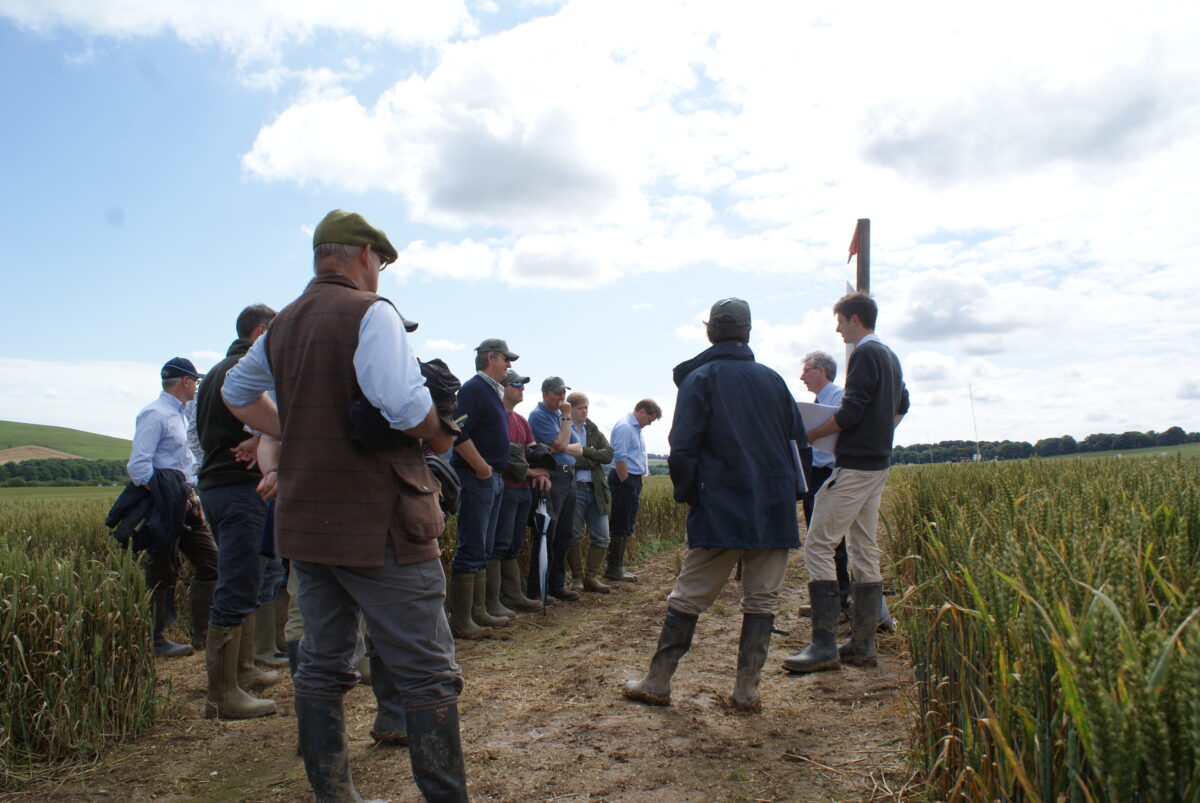
The day will include sessions to share results from the TRUTH trials and a farm walk to see the trials at Thrales End. 

Other sessions include a talk from Hutchinsons Soil Services Specialist Zara Northern, and a workshop by BOFIN founder Tom Allen-Stevens on peer-to-peer learning in farming.

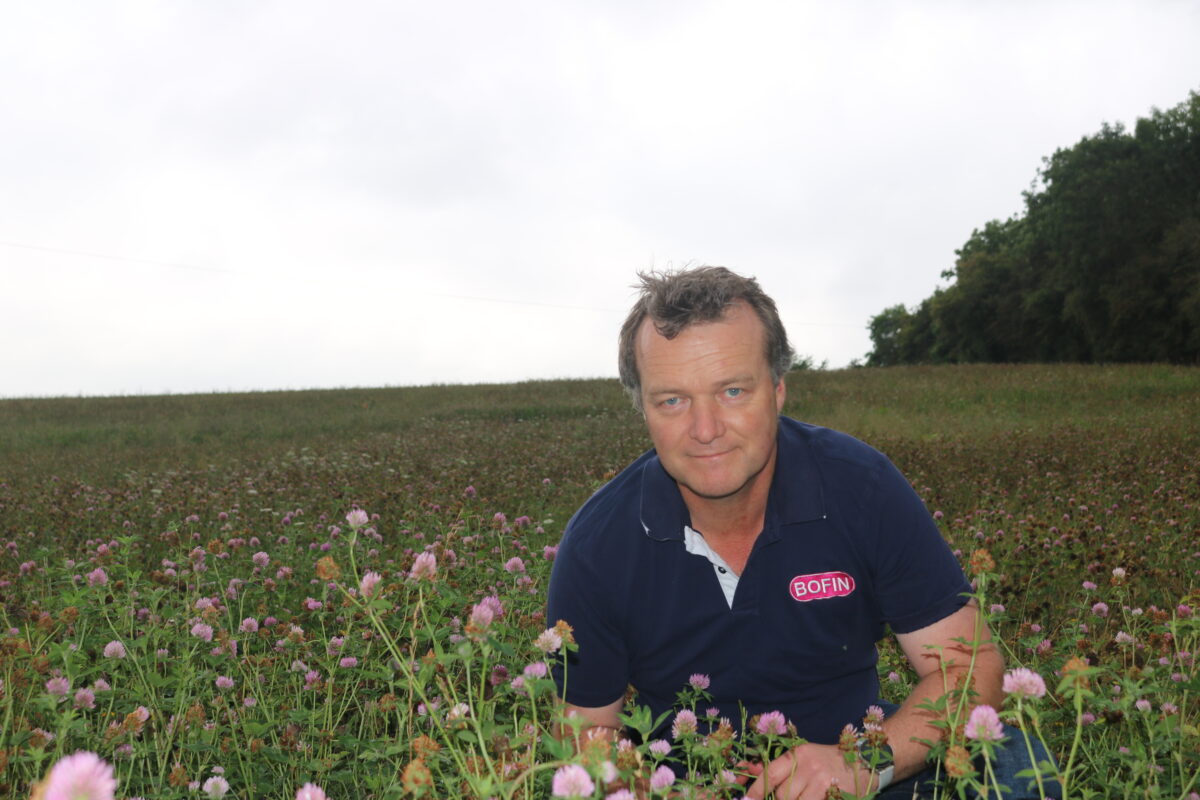
Event host and Thrales End Farm manager Ted Allen-Stevens, has been a Root Ranger since 2023. 

He said: “I’m looking forward to sharing our learning from the project which has been really significant for us. Our results so far have given us some real evidence that soil health has improved since we brought in regenerative practices. 

“I hope the day will encourage other farmers to get involved with on-farm trials. It’s only when you drill down into the detail of your own farm that you can get that substance and reassurance of what you’re actually achieving.” 

Details of the other two Inspiration Days (in Oxfordshire and Angus) will be announced soon. To register for a free place visit https://tinyurl.com/eastinspiration26.

Categories
ADOPT BOFIN

Farming Investment Programme must be future proofed

BOFIN calls for clarity on Defra funding announcement 

Tom-Allen Stevens responds to the Defra Secretary’s recent announcement at the NFU conference.

The £345 million announced by Defra secretary Emma Reynolds at the NFU conference yesterday (24th February 2026) is welcome news, but without further clarification it raises further questions.

Tom Allen-Stevens, Oxfordshire farmer and founder of the British On-Farm Innovation Network (BOFIN) Tom Allen-Stevens said: “It is good to see that Defra is continuing to fund the Farming Innovation Programme which supports farmer-led research and that there is a further £50 million for the Farming Equipment and Technology Fund. The question is whether this is enough. 

“When Defra first announced plans to move away from direct support to the Environmental Land Management schemes, some 9-10% of the £2.4 billion farm transition budget was safeguarded for ‘Improving Farm Prosperity’ which included the innovation measures announced today.”

It is unclear how many years the £345m headline figure covers, he continued. “The £225m for capital measures for ELMs should sit outside that Farm Prosperity Fund. Paying for fences, hedges and pond restoration should not be branded as supporting innovation.

“But what farmers are crying out for is clarity on ADOPT. The scheme was originally backed by a commitment of £43m, yet only £20.6m has so far been allocated to a number of excellent farmer-led projects. Will Defra now commit to making the rest of this fund available? We have pioneer farmers queuing up ready to take up the opportunity.”

Mr Allen-Stevens also called on the Government to fully future-proof the FIP. “Defra has led the way on investing in farmer-led research, and the current FIP is ground-breaking. The funds announced today will take us to the end of this Parliament. It will be up to this government to take the strategy forward and propose the next stage of the programme. 

“Defra says it wants farm businesses that are productive, profitable, and resilient. FIP can deliver on that, but needs a long-term strategy beyond 2030, giving farmers and researchers the confidence to invest in innovation.”

Emma Reynold’s announcement, made to the NFU Conference today, can be found here.

Categories
SLIMERS SLIMERS+

High-tech imaging could transform how farmers monitor slug populations 

How researchers have harnessed tech to detect slugs

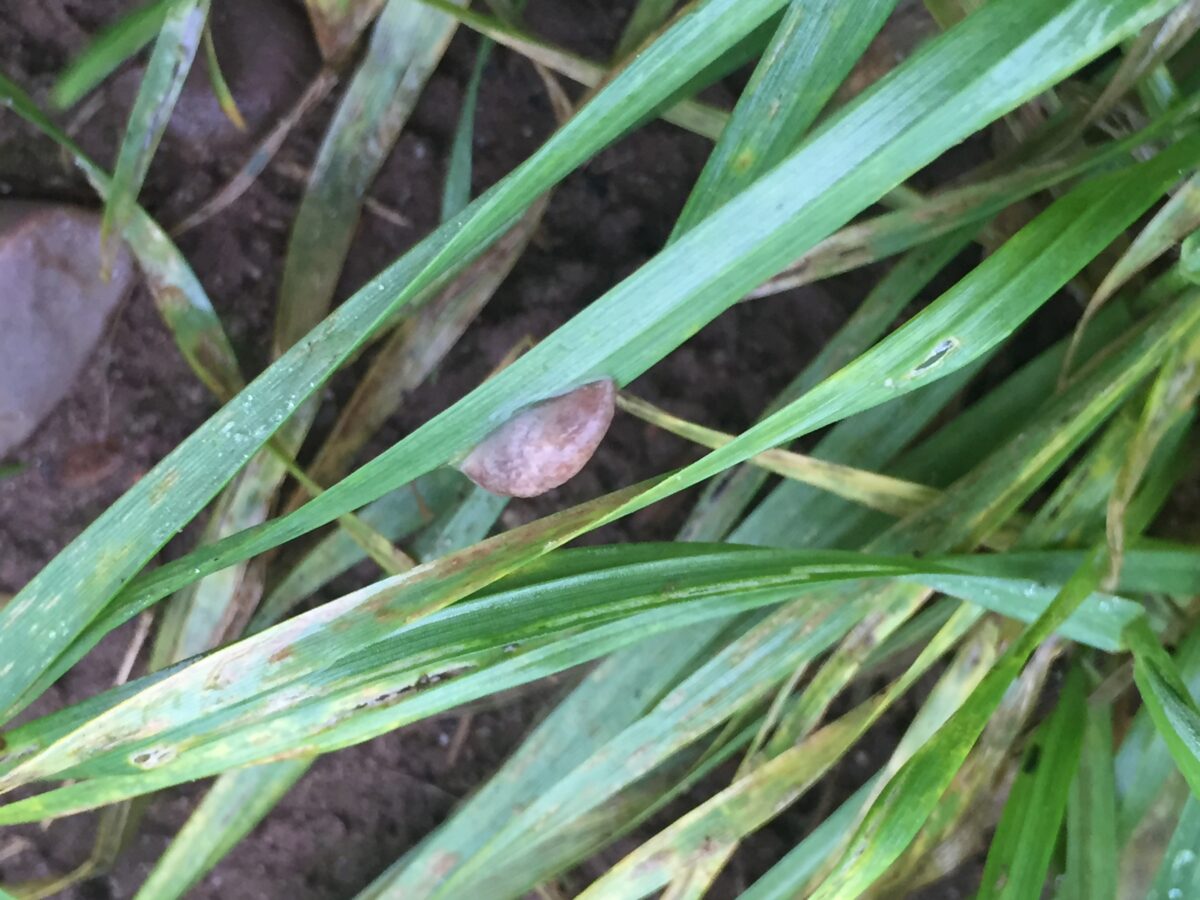
Researchers from the UK Agri-Tech Centre and Rothamsted Research have identified a high-tech method to detect the grey field slug or Deroceras reticulatum. 

Their discovery paves the way for both automated in-field monitoring and the development of novel, precision slug control strategies, including the use of biocontrols and biorationals.  

In a paper published this week, the researchers describe their studies which explored the potential of multispectral and fluorescence imaging to detect slugs. Results showed that multispectral imaging can be used to identify D. reticulatum and differentiate the pest from common agricultural field-surface materials. 

They found that as few as five wavelengths were sufficient for slug detection including from the UV (365nanometer or nm), blue (405 and 450nm), green (570nm) and NIR (880nm). Fluorescence imaging failed todetect a slug-specific signal. 

The paper brings together data from two Innovate UK funded projects – SlugBot and SLIMERS – which were supported through the SMART and Defra’s Farming Innovation Programmes, respectively.  

Their work focused on the grey field slug, one of the most economically significant slug pests and a major cause of crop damage.  

Historically, farmers have monitored slugs using traps or visual observations, however, these manual approaches are labour intensive and reduce the scope of monitoring. Automated slug detection could provide more detailed insights into slug populations and support the development of precision slug control strategies.  

Technical lead for the SLIMERS project, Dr Jenna Ross OBE (UK Agri-Tech Centre), said: “This exciting piece of work brought together a fantastic multidisciplinary team to develop a game-changing solution for improved monitoring of pestiferous slugs.  

“By identifying these unique wavelengths of light, we can start to use these data to develop real world applications for improved slug monitoring and subsequent control.”   

SLIMERS – Strategies Leading to Improved Management and Enhanced Resilience against Slugs – is a three-year £2.6M research programme involving more than 100 farms and seven partners.  

Funded by Defra’s Farming Innovation Programme, delivered by Innovate UK, the project is led by the British On-Farm Innovation Network (BOFIN). It combines expertise from partner organisations the UK Agri-Tech Centre, Harper Adams University, the John Innes Centre, Fotenix, Farmscan Ag and Agrivation. Together theconsortium is developing cost-effective forecasting and precision treatment tools, an Al-based autonomous system for the targeted application of biological control, and exploring ‘slug resistant’ wheat varieties.